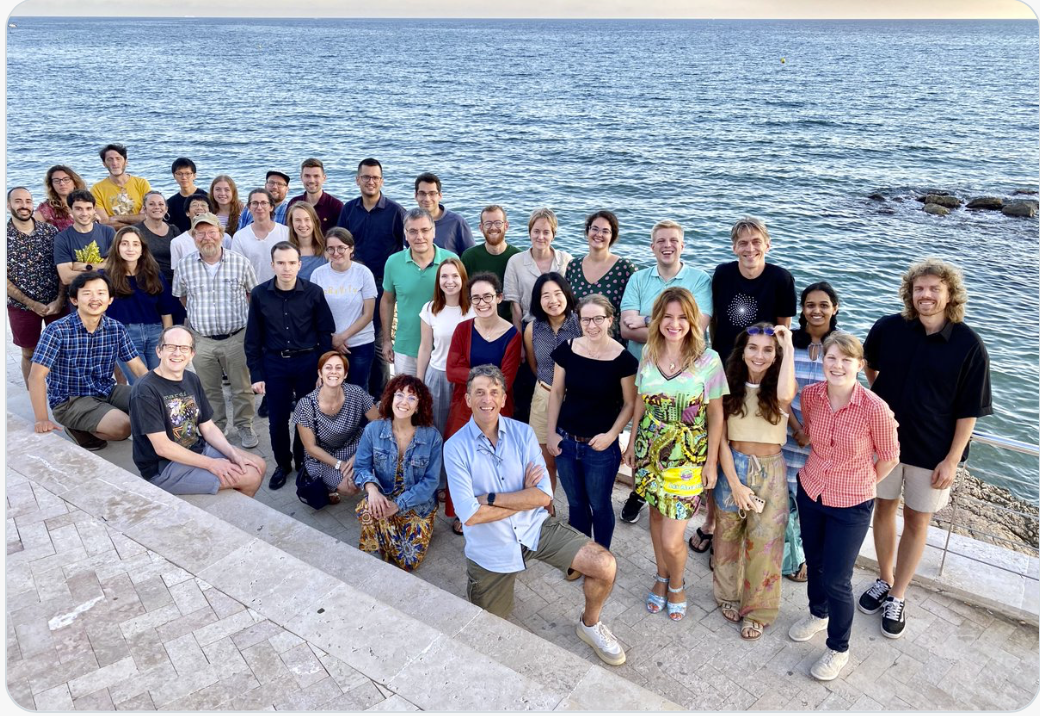
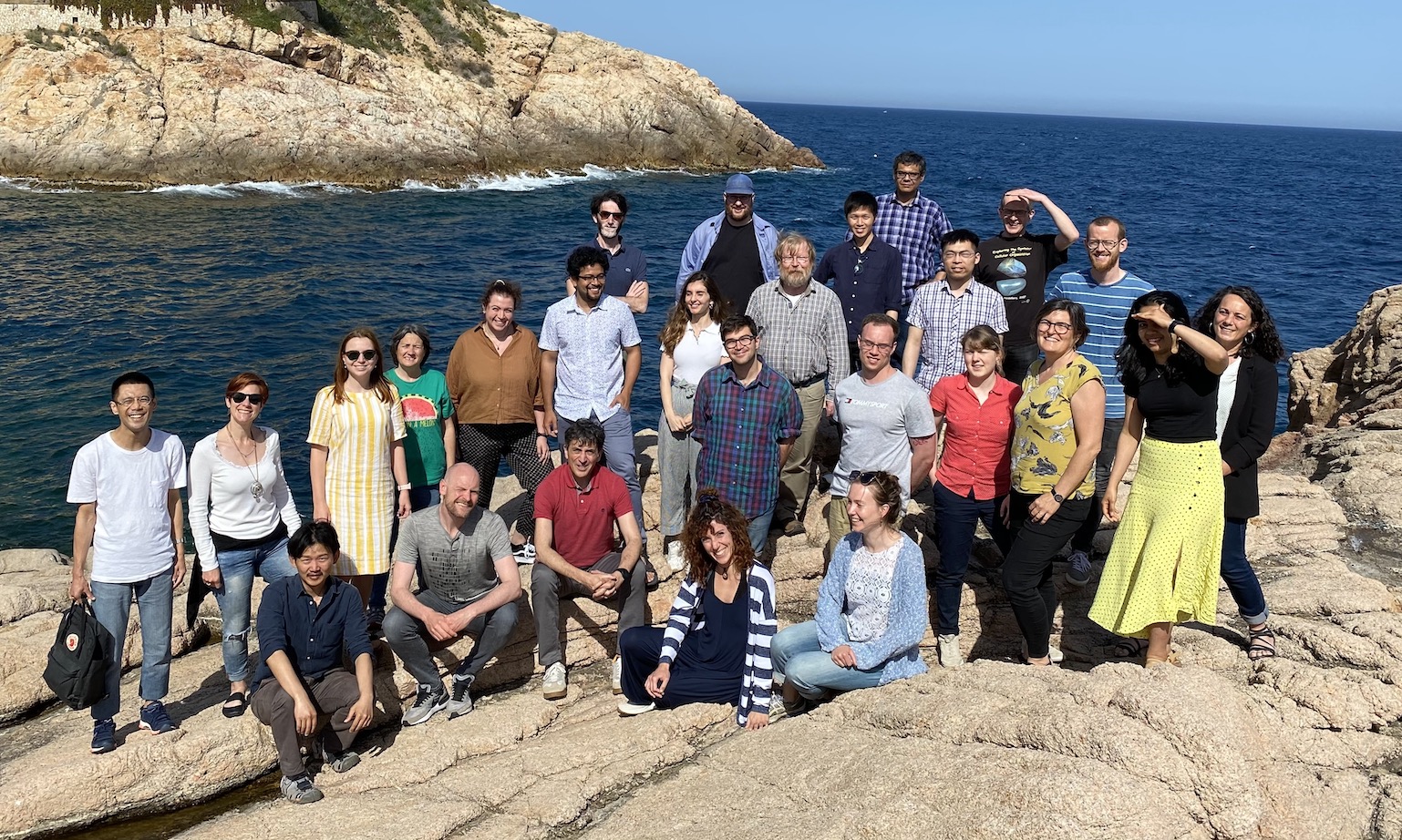
ANEUPLOIDY (SyG 855158) & BioMecaNet (SyG 951430) joined forces in 2023 for their retreat in Sitges:
Great Synergy! A productive joint retreat full of inspiring discussions and new ideas.
Welcome to BioMecaNet’s website!
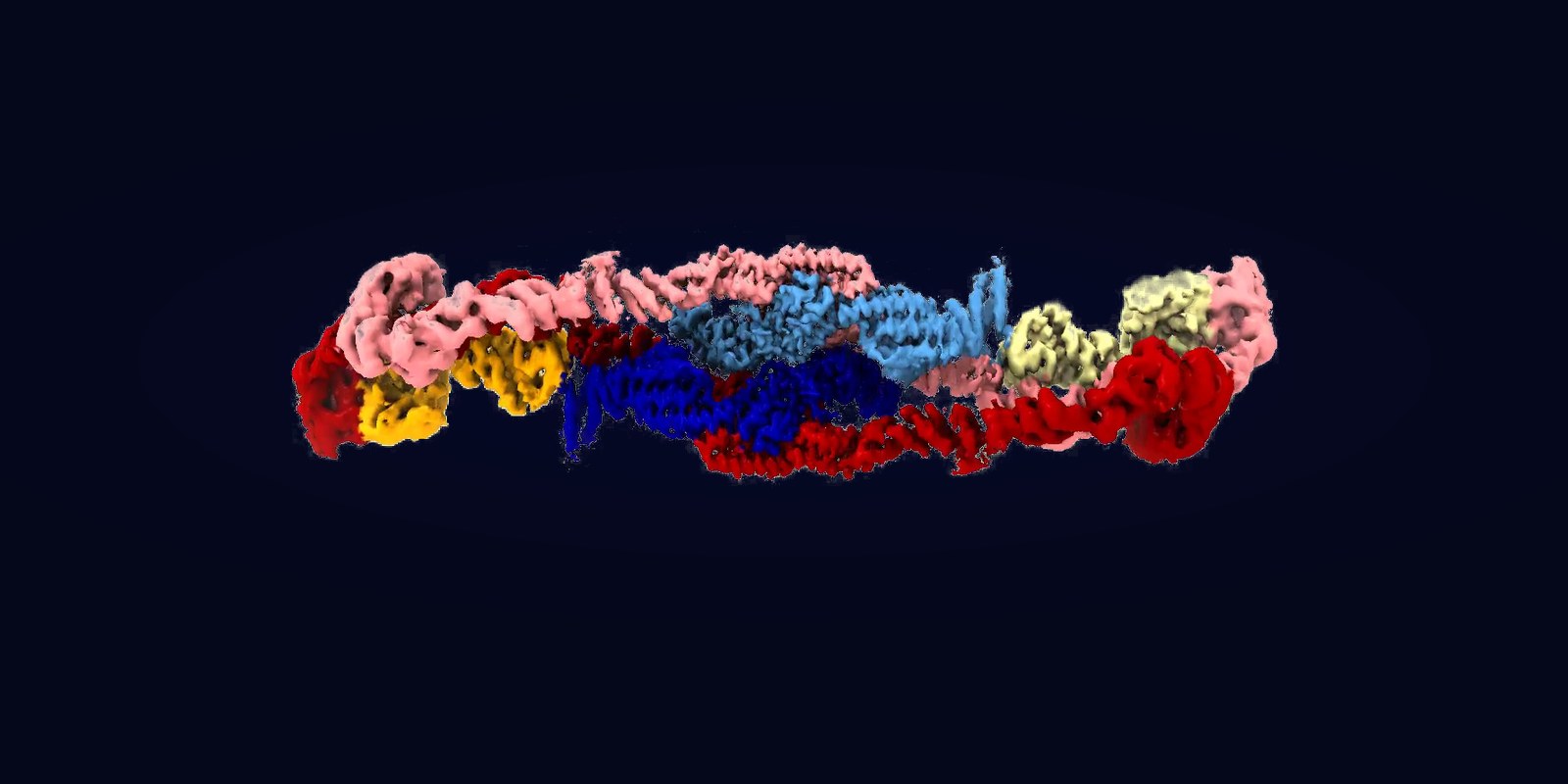
BioMecaNet aims to reconstitute crucial aspects of cell division in vitro with purified components and realistically simulate these processes in the computer.
The emphasis will be on how the cell cycle influences the mechanical workings of the cytoskeleton and how the physicochemical monitoring of the chromosome bi-orientation process affects the cell cycle.
With an official start date in July 2021, BioMecaNet will be funded for a period of 6 years by the European Research Council (ERC) under the Synergy Grant scheme. A structured, continuous collaboration of the computational and biochemical groups will inspire the work through the duration of funding.
BioMecaNet is a collaboration of the computational simulation group of François Nédélec with the experimental working groups of Andrea Musacchio and Thomas Surrey.
Sainsbury Laboratory, University of Cambridge
Cambridge, United Kingdom
Max Planck Institute of Molecular Physiology
Dortmund, Germany
Centre for Genomic Regulation (CRG)
Barcelona, Spain
ANEUPLOIDY (SyG 855158) & BioMecaNet (SyG 951430) joined forces in 2023 for their retreat in Sitges:
Great Synergy! A productive joint retreat full of inspiring discussions and new ideas.
Cytosim was updated to be able to simulate the process of chromosome segregation as proposed in BioMecaNet. The code is publicly available and Open Source since 03.2025.
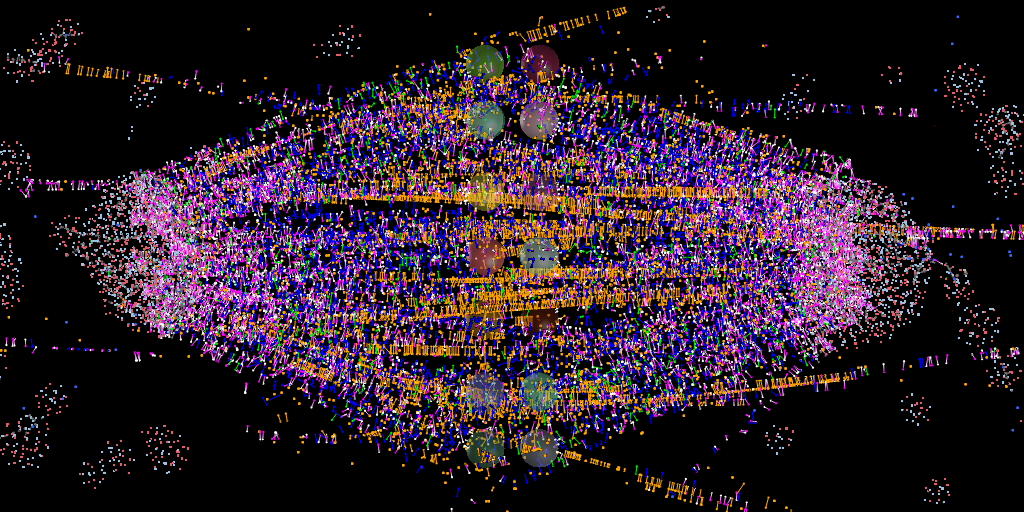
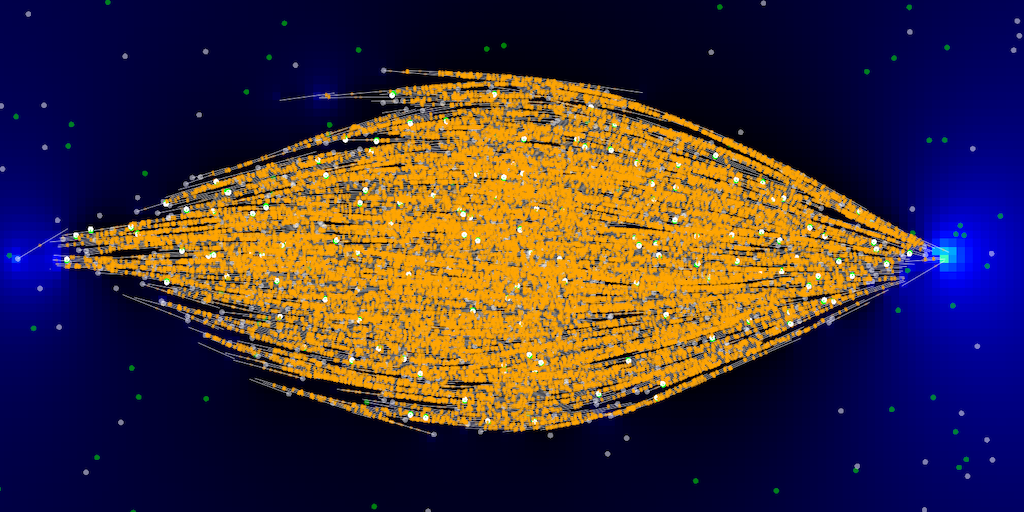
As part of BioMecaNet, we have modelled the mitotic spindle found in the roots of Arabidopsis thaliana. In collaboration with Arp Schnittger (Hamburg), we were able to determine experimentally the key parameters of this structure: number of microtubules, growth, microtubule lengths, poleward flux, number of MT at kinetochores, etc. 3D models were so far available only for yeasts (S. pombe and S. cerevisiae). This is the first morphologically accurate spindle, with ≈2000 microtubules.
Besides its size, this spindle differs from yeast spindles because microtubules turn over, are nucleated via the Augmin pathway, and undergo poleward flux: they are pushed towards the poles by Kinesin 5. Moreover, centrosome/MTOC are absent altogether, and the poles of the spindle self-assemble.
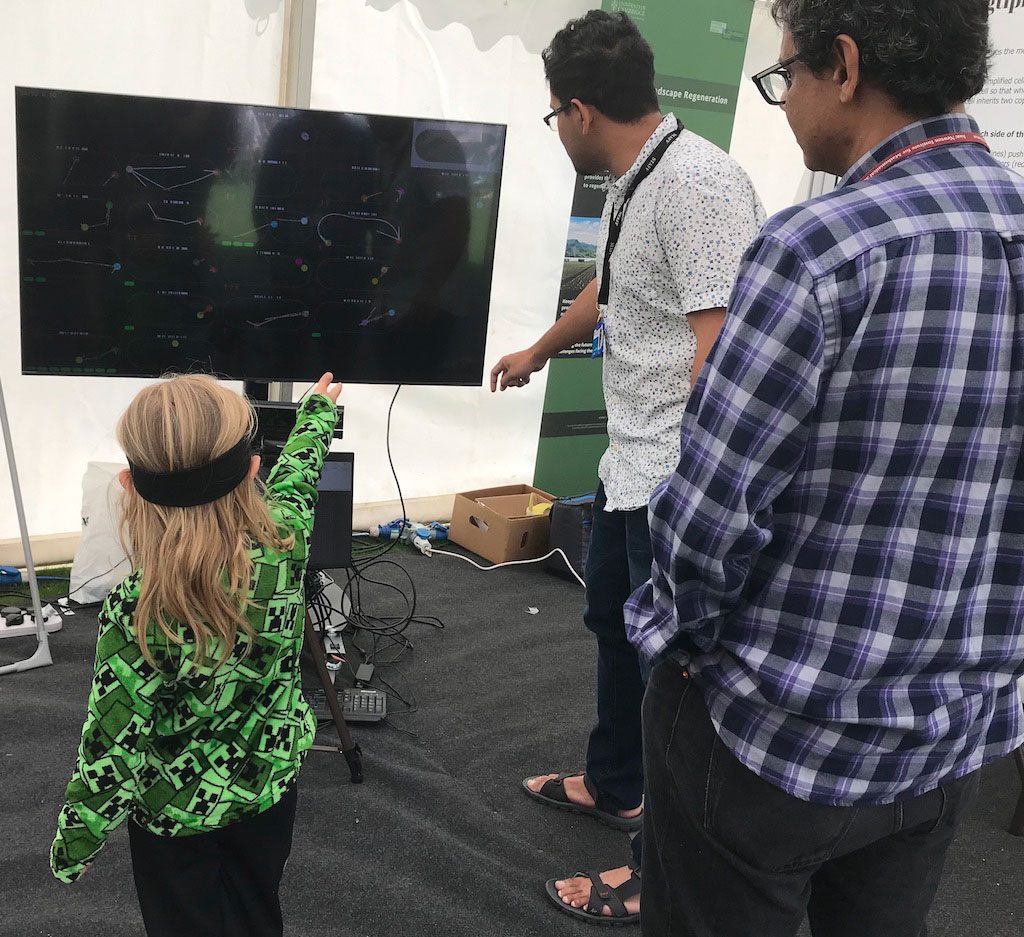
After much development efforts by Carlos Lugo and Eashan Saikia, our game Bugtiply, based on Cytosim, met its first 40 players during the Festival of Plants in the Cambridge University Botanic Garden, on June 11 2022.
Thank you to all members of BioMecaNet for the feedback we received during the retreat!
Bugtiply is an interactive game to explore the mechanism of mitosis – a type of cell division producing two identical daughter cells. Each simulated cell contains two chromosome copies (colored balls) pushed apart by filaments (white), with the help of molecular motors (small red lines). If the two chromosomes are pushed in opposite halves of the cell, the division of the cell in its middle will lead to correct partitioning: each daughter cell will inherit one copy of the chromosome. Incorrect partitioning occurs when one cell inherits two copies, and the other one gets none. In nature, this last configuration would likely lead to the death of both cells.
During cell division, the spindle apparatus segregates duplicated chromosomes for their inheritance by the daughter cells. The spindle is a highly interconnected network of microtubule filaments that are crosslinked by different types of molecular motors. How the different motors cooperate to organize the spindle network is not understood. Here, we show that an asymmetric crosslinker design can confer bifunctionality to a mitotic motor in the presence of other motors. The asymmetric motor supports both extensile and contractile microtubule network behaviors as observed in different parts of the spindle. These findings define new rules controlling the generation of active microtubule networks and allow us to better understand how motors cooperate to organize the correct spindle architecture when a cell divides.
We are in Sant Feliu de Guíxols for our first in-person meeting with all the groups!
We are having a very interesting scientific exchange online. Sabina Colombo just explained how she purified γ-TuRC complexes.
Proc. Natl. Acad. Sci. U.S.A. 122, e2422190122
Nature Communications 16, 4823
Nature Communications 15, 9213
Developmental Cell 59, 2947-2961 e2949
The EMBO Journal 42, e114838
The EMBO Journal. Preprint on bioRxiv
Preprint, bioRxiv
Preprint, arXiv
Protein Science